
A continuing education approach that helps massage therapists work smarter, not harder - by work with the intelligence of the somatosensory system, for longer lasting relief.
Modern pain science teaches that the body communicates through tension and thus pain, relating to the nervous system by way of the fascial system. Our deep pressure can potentially miss the sensitive messages the body presents with.
Do you know what your client’s tension is communicating?
Long held restrictions can be released fast if we know how to be attentive with our palpation -which can give us ample information, if we know what to feel and look for. Learn to understand why the body holds tension—not just where it hurts—and make every session more focused, responsive, and progressive.
Your client’s fascia and nervous system is our super power
Force is where injuries happen, in ourselves and in our clients. When pain and tension keep returning, more pressure may not be the answer. Protective responses in the nervous system can limit release—even when the therapist is working in the right area. The body’s nerve endings respond to so much more than just hard pressure. Learn to use your pressure as a form of communication with the client’s nervous system to work with it, rather than against it, for more integrated and sustainable relief.
A Smarter Approach to Persistent Tension
Fascia Fluency is an evidence-based, trauma-informed approach that teaches massage therapists to recognize how fascia, stress, and the nervous system influence pain and movement.
Rather than automatically adding pressure, you learn to assess the patterns beneath tension and select techniques that support the body’s natural capacity to change.
What You’ll Learn
· Identify patterns and restrictions with assessment, observation and advanced palpation skills.
· Recognize protective nervous-system responses that may keep tension in place.
· Learn of gentle, yet effective alternatives and targeted techniques instead of relying on harder pressure.
· Support easier movement, improved tissue function, and reduced pain.
· Adapt each session to the client’s needs and tolerance.
· Use table time more efficiently while reducing strain on your own body.
Who This Training Is For?
Massage therapy now supports a broad range of wellness and therapeutic goals, not just relaxation. Doctors are increasingly referring to massage in addition to a rehab and pain management plan of care. As the medical industry is increasingly relying on our industry for pain relief, out skillsets need to also adapt to help them appropriately, in a wide array of settings.
This continuing education is designed for massage therapists in spas, wellness practices, rehabilitation settings, and clinical environments. It is especially useful for practitioners who work with recurring pain, injury recovery, stress-related tension, or clients who cannot tolerate deep-tissue work.
The Paradox of Pressure -
Gentle Does Not Mean Less Effective
Working with the nervous system and modulating pressure, can release superficial restrictions making it easier to access deeper tissues.
Built on more than fifteen years of pain-management and injury-care experience, Fascia Fluency combines research-informed principles with practical techniques you can bring directly to the table.
Expand your skills. Protect your body. Help more clients.
Enroll in Fascia Fluency continuing education to learn how to speak the
body’s language of tension and restriction.
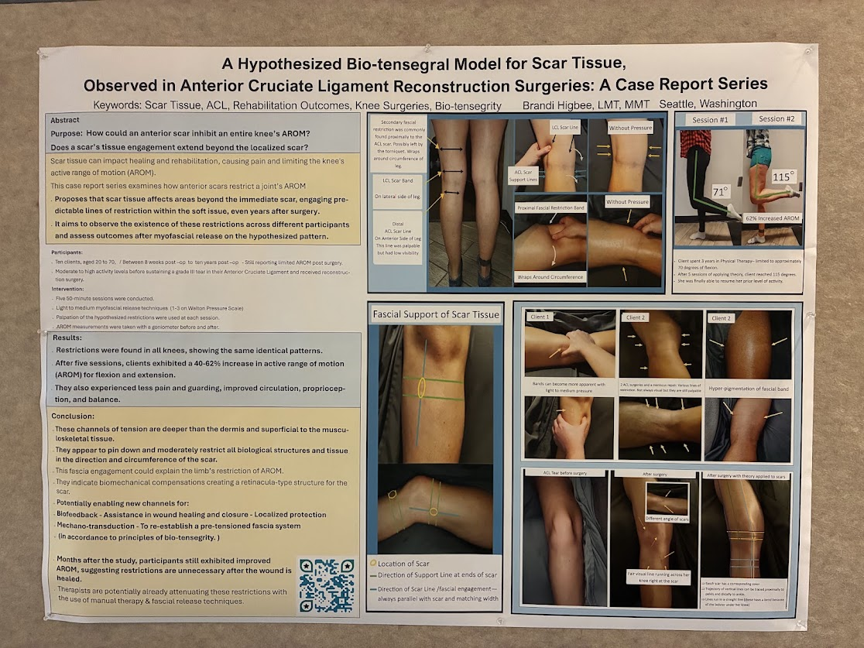
Scar tissue - Special Populations - Chronic Pain -
Trauma Informed Care for Client & Therapists
Upcoming Classes
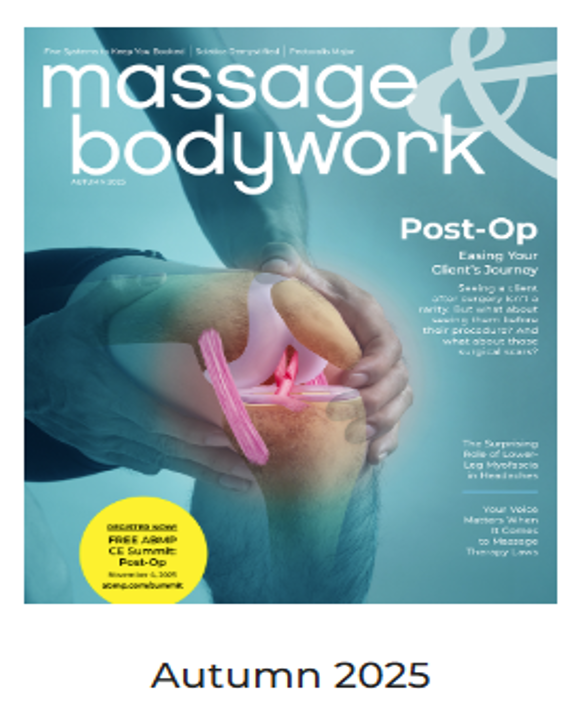

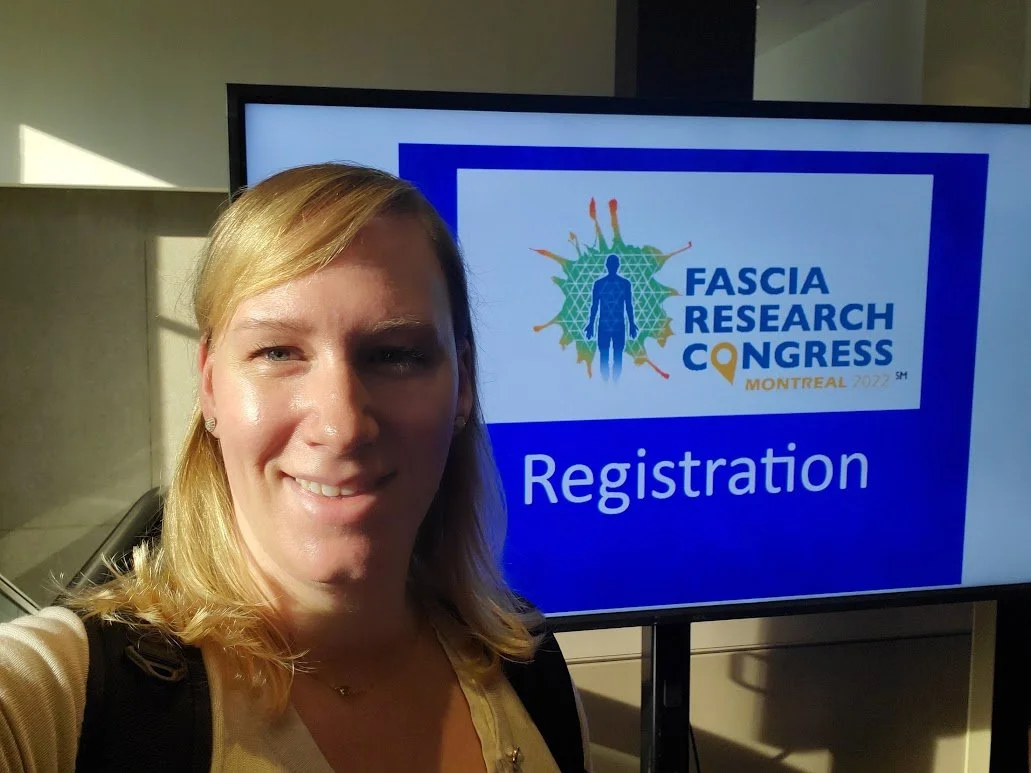
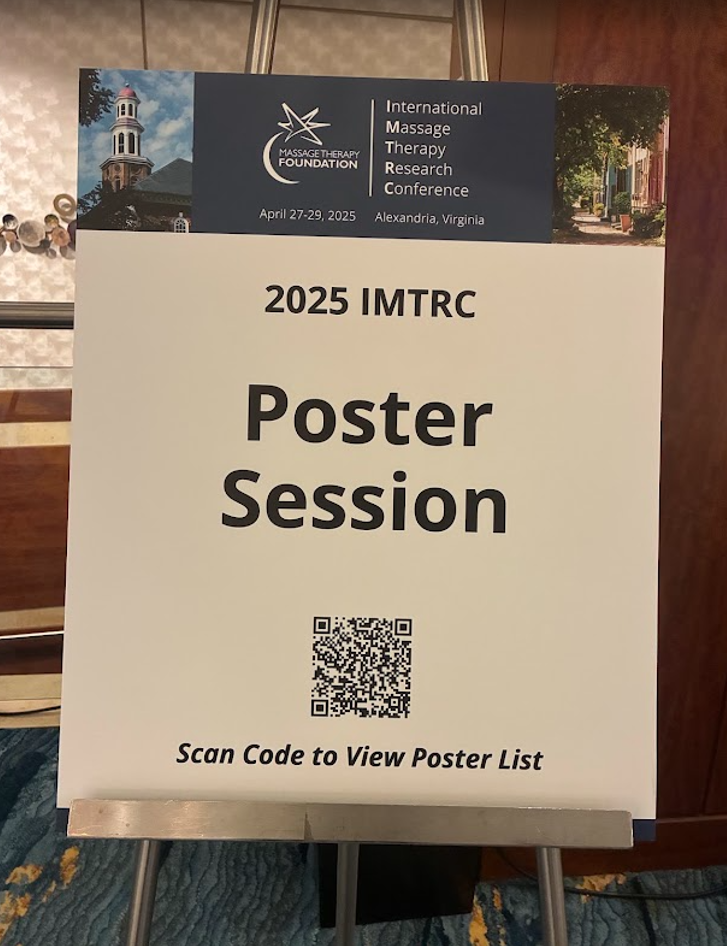
Research Poster Display
6th International Fascial Research Congress,
Montreal, CA, 2022.
International Massage Therapy Research Conference,
Alexandria, VA, 2025.
American Massage Therapy Association Convention,
-Dallas, TX 2025
-Denver, CO, 2026

Bridging the gap between trauma informed
care and therapeutic massage therapy
Knowledge is power
-

Stress/Trauma
Clients often seek massage therapy to alleviate stress, but with the increasing number of clients looking for pain relief, therapists must understand how stress and trauma manifests in the body; and how to release it. Over time old injuries can lead to chronic pain later on in life.
-

Adaptation
Our body naturally adapts and heals despite injuries, repetitive strains, stress, and overall health. While it knows how to tighten in response to these challenges, it doesn't always know how to release these restrictions. Understanding the mechanisms of tension under our hands can help us better assist our clients.
-

Re-Integration
Understanding adaptations allows us to strategically assist clients by restoring scared tissue and restrictions into functional tissue. This helps reintegrate the tissue back into the neural network of the fascial system, which thereby helps the body’s function of homeostasis.